| primary
(base) art > manifest (short summary)
PRIMARY STRUCTURES OF FORMS IN THE UNIVERSE,
LIFE AND MIND.
(Brief summary, definitions and basic forms
of the Universe in 2-dimentional space or a mathematical approach
to the concept of beauty.)
What is all about? It is about how all forms
of Life look like being part of remarkably simple Universal
"language",why a scientist, an artist, a fish have
different pleasing sensory effects and different aesthetics
based on the same simplicity of Nature, and about "primary
art".
"Unlike more superficial forms of expertise,
mathematics is a way of saying less and less about more and
more. A mathematical text is thus not en end in itself, but
a key to a world beyond the compass of ordinary description."
G. Spencer Brown. "Laws of
Form". 1972
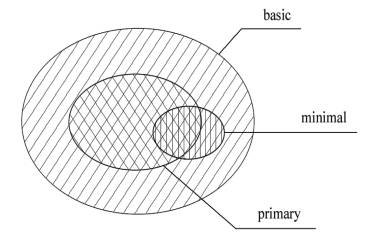
The center of the figure has highest degree of formality.
Basic – something fundamental, underlying,
starting point which stays in any development or evolution.
Primary – something first in rank, fundamental which
forms any development path of evolution.
Minimal – of the least possible, synonymous to economical.
I would like to make the distinction between minimal, base
and primary art. Primary art is always minimal by its very
nature, but minimal art is not necessarily a primary one.
The definition of base art is something underlying but does
not fit the idea of development and evolution. The minimal
art was an essential step of our culture based on the concept
of the "economical" universe, which is true, but
it is only one of the "primary ideas" of the mind
& universe, and the beauty likes to "play"
in variations, which are not really economical.
"Aesthetics is the brunch of philosophy
dealing with beauty and taste, based on the pleasing sensory
effect". (Definition from a dictionary). A fish, an artist,
a musician and a mathematician have primary the same but different
developed senses and different pleasing sensory effects and
thus different concepts of beauty. It depends on the degree
of its formality in their fields of experience and knowledge.
Aesthetics are many but the reason is one. The reason isl
– a pleasure to see, "understanding", equilibrium
between "inside" and "outside", a generalization
which is present in every discovery. Mind "understands"
Universe, being not only part of it, but having the same substance.
Many philosophers mentioned the paradox of knowledge:
Spinoza – "By substance I mean that which is in
itself and is conceived by itself"
Kant mentioned that it is impossible to get knowledge or meaning
from experience, but only from knowledge itself by forming
"transcendental ideas" beyond any experience.
In linguistic, Chomsky created famous expression: "Colorless
green ideas sleep furiously", where much of grammatical
structure is independent of meaning and all languages have
the same deep structure as inherited basis for translation.
Plato – "Learning is discovering what we already
know".
Whitehead – "Art is imposing of a pattern on experience,
and our aesthetic enjoinment is recognition of the pattern".
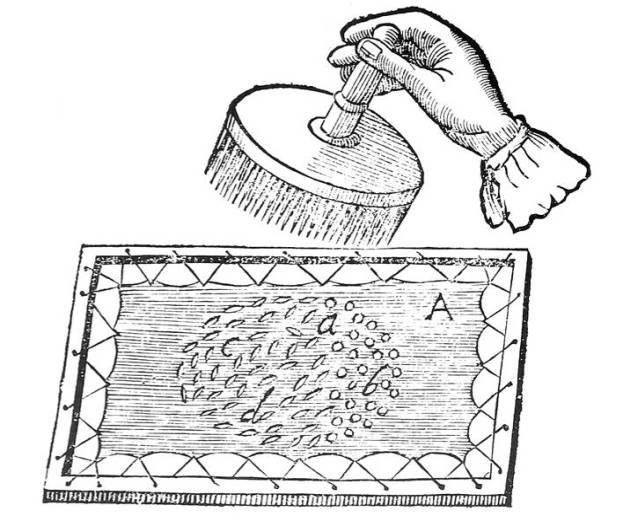
Fig. 1. Rene Descartes’s far-sighted analogy for mental memory
(dated 1664). From the book "Mechanics of the mind"
by Colin Blakemore. 1977
Here he expressed
the process of remembering as a set of the holes in the
vital spirit A made by a set of needles of the original
pattern of sense’s activity which is left and could be recalled
by repetition even only part of the original sensory pattern,
especially when the original pattern was repeated many times
before.
Physiologically our senses form a model of outside world as a kind of map
or set of patterns which are transmitted to a brain forming
different brain’s maps based on evolutionary developed primary
patterns. The patterns should reflect some “universal language”
like Kantians transcendental objects or “pure reason” because
any brain is a part of the Universe itself having the same
substance. Kant figured “vital spirit” or “pure reason”
as a prisoner of senses.
V. Kandinsky mentioned the same “universal language”.
All his definitions of composition, forms and colors in abstraction
were generalized from the culture itself.
“The Black Square” of Malevitch is a generalization of culture
in a sense when primitive mandala was developed to a house.
The beginning of civilization was marked by invention of
a brick from clay and introduction of clay tablets with
one dimensional cipher of writing and become now a space
of pixels like we see in works of Mondrian. Symmetry was
studied by Escher. Constantine Brancusi analyzed the natural
forms in sculpture.
Understanding this primary objects and their interaction is partly possible
through studying evolution of life especially its chemical
origin, embryology and psychological development of a child
with help of mathematical ideas. It is only one way to the
universal language of Nature.
Thus, according to Kant we can not speak about meaning but only
about structure of meaning. The structure, the patterns
are evolutionary implanted and developed inside Mind.
“In expanding life …intellect… has been fashioned
by evolution during the course of progress; it is cut out
of smth. larger or, rather it is only the projection, necessarily
on a plane, or a reality that possesses both relief and depth.”
H. Bergson . From “Creative evolution”.
1911
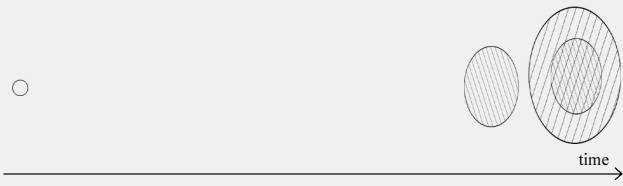
Fig. 2. Evolutional pattern of Life, Mind
and Universe as a process and as a graph:
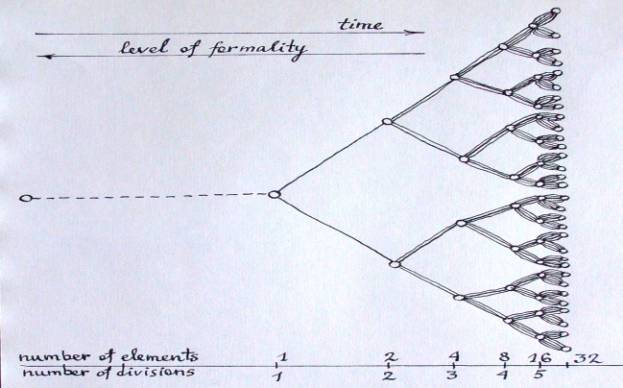
Fig. 2. Evolution of life has “an arrow of time”
which makes it non-reversible and asymmetrical. Other important
feature of evolution is progressive acceleration of time-space
continuum and gradually increasing complexity all forms of
cells and organisms following decreasing changes of the physical
lows and free energy with expanding and dispersion energy-matter
in time. We pay for the complexity and reproduction by loosing
regeneration and ageing. Culture itself and mental theories
follow the same pattern.
Senses are developed from simple chemical reaction
to stimulus on membranes up to vision where an eye of octopus
still has a proof of the first “prototype” with photoreceptors
pointing to light instead of highly developed eyes of mammals
where it is opposite. Basically the same senses of men with
genetically programmed brain’s ability to learn differ tremendously
in cultures, fields of activity and levels of training. The
same landscape “says” and “pleases” very differently a dog,
a mathematician, a musician, and a visual artist because of
different levels of formality in their fields of experience
and thus their sensations and perceptions form different “aesthetics”
but their sensations are the same substance with the same
primary structures.
There is no principal difference between organic
and inorganic matter, Life itself and Matter, at least from
the scientific point of view. The two are made from the same
elements, not many in numbers.” The material bases of life
are the commonest of all the elements of the Universe: hydrogen,
carbon, oxygen and nitrogen” (J. D. Bernal). The only difference
is - ” Life is aperiodical and asymmetrical crystal” which
has parasitic feature, being ”order from order”( Schrödinger.)
.An organism has rotations of 5, 7 order both in plants and
animals, a crystal belongs to one of the 32 classes which
involve symmetrical rotations of the orders of 2, 3, 4, 6
and no more. Left and right symmetry is most intriguing puzzle
of Nature-structures of different symmetries do not fit each
other.
“The specific peculiarity of living organisms
is only that in them there have been collected and integrated
an extremely complicated combination of a large number of
properties and characteristics which are present in isolation
in various dead, inorganic bodies. Life is not characterized
by any special properties but by a definite, specific, combination
of these properties.”
J. D. Bernal. ”The Origin of Life”. 1969
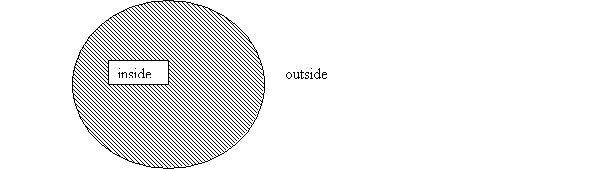
Fig. 3. Form.
“…a universe comes into being when a space is severed or taking apart.
The skin of a living organism cuts off an outside from inside.
So does the circumference of a circle in a plane. By tracing
the way we represent such a severance, we can begin to reconstruct,
with an accuracy and coverage that appear almost uncanny,
the basic forms underlying linguistic, mathematical, physical,
and biological science, and can begin to see how the familiar
laws of our own experience follow inexorably from the original
act of severance. “
“Although all forms, and thus all universes,
are possible and any particular form mutable, it becomes
evident that the laws relating such forms are the same in
any universe.”
G. Spencer Brown. ”Laws of Form”1969
A circle is generalisation of every possible
object or meaning of the object - it is the symbol of generalisation.
Evolution of life derived first primitive cells from long
chains of linear molecules, evolved from open forms to topologically
closed forms, developed a system instead of aggregate and
created the difference between inside and outside. It is
the same pattern to evolve army from primitive tribe or
crowd. So does any theory from many observations and data.
Mental developing of a child follows developing of culture and
reflects the primary patterns very clearly at early stages
together with ability to master a language”. Ontogeny recapitulates
phylogeny” – Haeckel’s expression is true for the patterns
and the structures of evolution.
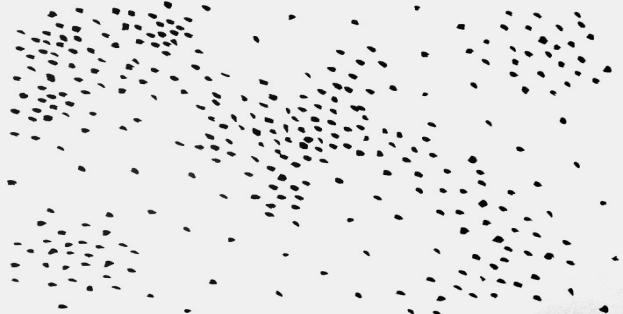
Fig. 4. Stage1. A model of aggregate of particles,
showing natural tendency to cluster because of asymmetry of
space-time or gravitation. Clustering is later developed “herd
instinct” of S. Freud. Any cluster will form later a part
of a system with its differences. All mythologies mentioned
genesis as formation mankind from the dust of the ground.
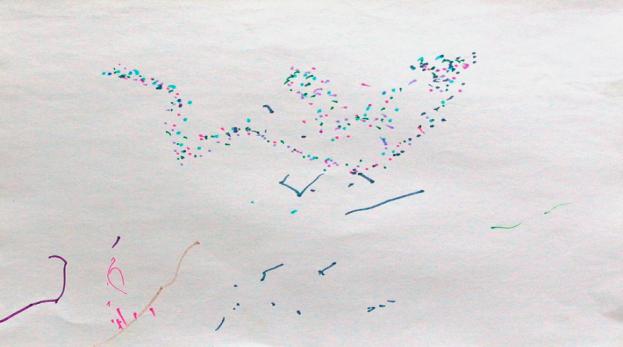
A drawing of a child showing the same pattern.
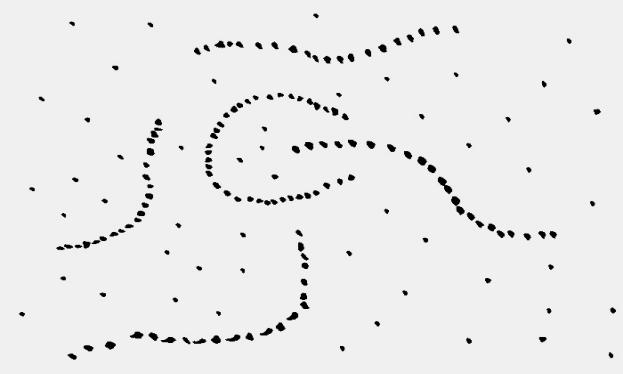
Fig. 5. Stage 2. A model of first linear molecules of open forms, chains
of particles or first elements of speech. Minimal chain
is 3 particles-any grammar starts from 3 units or words(object
acts with another object or itself).Note here that “object”
and “action” belong to concept of “solid body”(object) and
muscle “movement”(force) for Life on the Earth, while crystals
and atoms show already other and more general phenomenon
of energy-matter relationship. The general definition of
harmony in music by Cecil Gray: “…two notes of the scale
sounded together intentionally” proves higher level of formality
in music compare to language where an interval between notes
or stimulus is considered as a part of minimal unit of a
“sentence.”
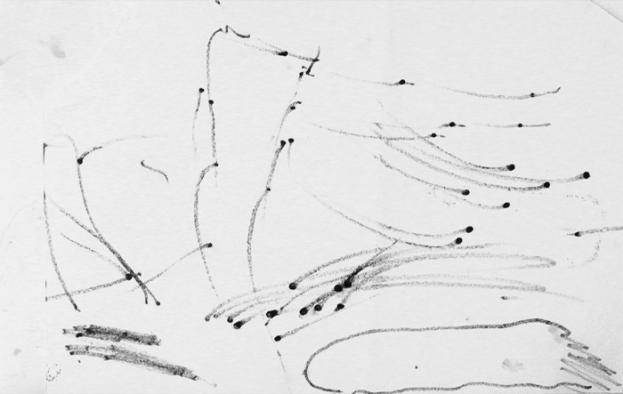
A child’s drawing as illustration of Stage 2.
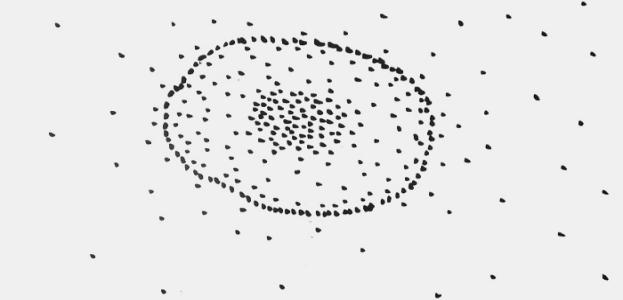
Fig. 6. Stage 3. A model of a cell, a system
instead of aggregate, the difference between inside and
outside. All particles inside are now different from particles
outside by level of formality being “order” from “disorder”
and future nucleus- “order” from “order.” The primary sell,
a state, an army, a theory has now organization or composition
which is prescribed genetically in most broad sense for
reproduction and self-preservation.
A border, membrane or skin evolves as a self
closed line. Evolution of life is also an evolution of membrane,
which is the base for future developed senses from first
primitive receptors.
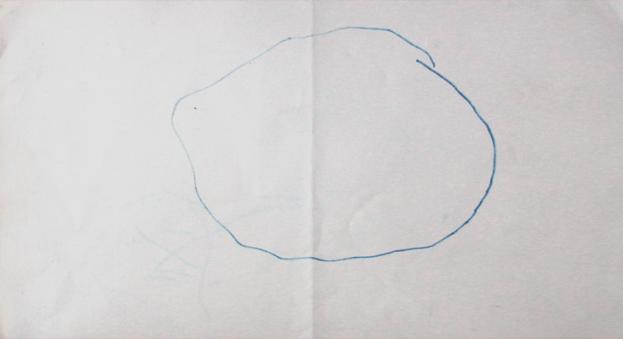
Stages 1, 2, and 3 from Fig. 4, 5, 6 could be traced in prehistory
of human culture when tremendous time was spent from first
traces by first tools or hands on rocks to create the idea
of mandala or self-identification.
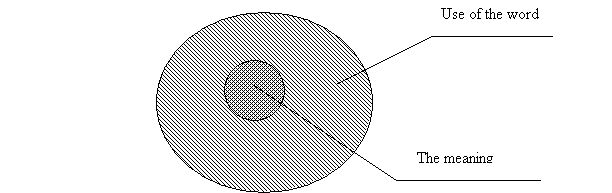
Fig. 7. Structure of a meaning (B. Russell)
(Note the difference and complexity from Fig. 3. The centre has highest degree of formality)
Every meaning of a word in a language could be expressed topologically
in 2-dimentional space of a page or a canvas or a screen
as a “cell”, where nucleus is the meaning and the field
around is the use of the word, “overlapping” with the other
synonyms. So does an atom, a cell, any organization like
a church or an army, any theory. In case of an army nucleus
of Fig.7 is General Stuff, all around are soldiers. If we
replace all soldiers by another ones-it is still the army,
but if we replace General Stuff-it is another army. There
is more in the case of “order.” Then white space outside
is “disorder”, first space inside is” order from disorder”
and the last space in nucleus is «order from order.” In
case of a theory the nucleus is the original idea and the
space around is its use and applications.
“…in the study of material things, number, order
and position are the threefold clue to exact knowledge;
that these three, in the mathematician’s hands, furnish
the “first outlines for a sketch of the Universe”; that
by square and circle we are helped, like Emile Verhaeren’s
carpenter, to conceive “Les lois indubitables et fecondes
Qui sont la regle et la claret du monde.”
D’Arcy Thompson ”On Growth and Form”. 1961
To continue so we may construct “primary map” of a language, where overlapping structures
are similar and synonymous (normally 3 in number), nucleuses never overlap and
clustering and density of nucleuses show most use or an attachment to a
particular sense of a body. It is a map of different languages, cultures,
spices, sensory representations on a brain’s surface, too.
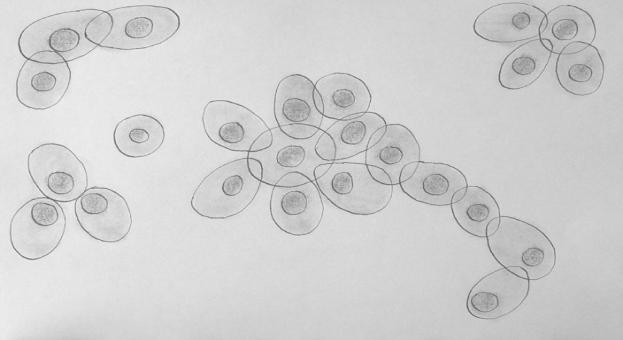
Fig. 8. “Primary map” of a language or projection
of senses on a brain map (simplest pattern).
The evolutional path of the structures could be topologically expressed like this,
showing different numbers, classes and orders:
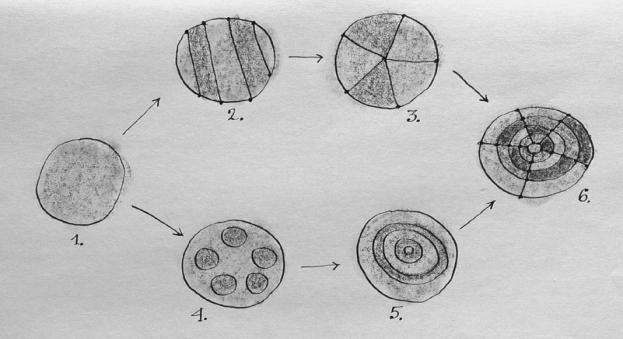
Fig. 9. Six basic primary structures.
There are many possibilities for other variations between 6 basic
structures. Sequence 1, 3, 6 shows development of an underground
map; 1, 2, 3, 6-development of central nervous system with
sensory organs on the skin, where 2 is very simple differentiated
structure of a worm but 3 is a structure of a sea star with
appearance of center, which is much more developed in 6.Anyone
from the structures could be used in Fig. 8 in more complex
patterns.
Here are child’s drawings of early primary
stages of structure development:
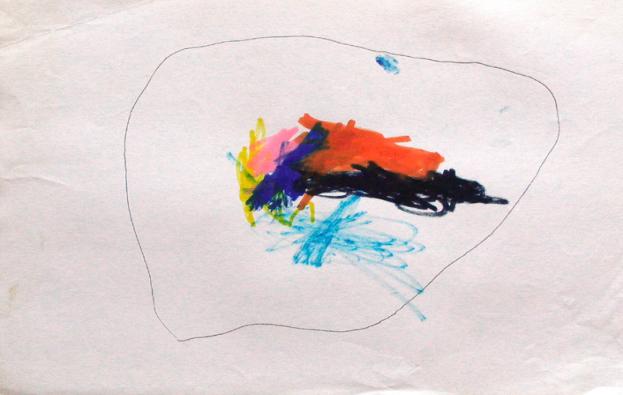
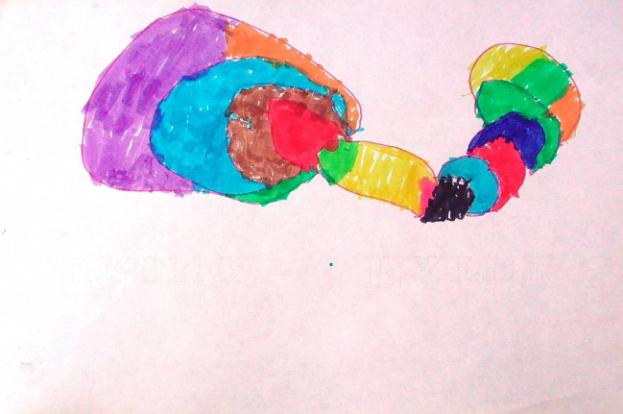
Every Universe, every form has the unknown
beginning and the end in “a larger reference frame” of knowledge thus two
“ideal objects” or two singularities, which are round in form from a first
stage of any developing universe to more complex forms showing different
systems of symmetry. In mythology it is God and Devil, Heaven and Hell, Genesis
and Apocalypses.
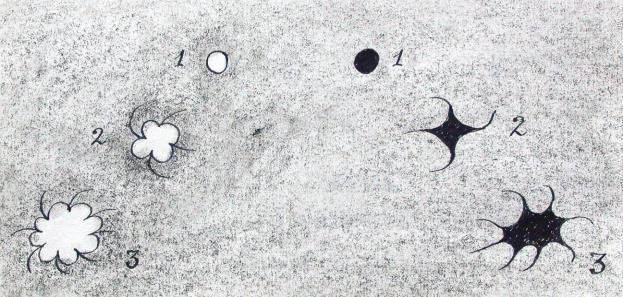
Fig. 10. Black and white singularities: stage
1-1 (round forms) and later stages 2-2 (symmetry 4)
and 3-3 (symmetry 8).
Every canvas or flat space with perimeter
P1, P2, P3, P4 is a two-dimensional model of a universe with
two singularities and other developing structures (on Fig. 11
only one in center is shown for simplicity). A – is a starting
and B - ending point of the whole process:
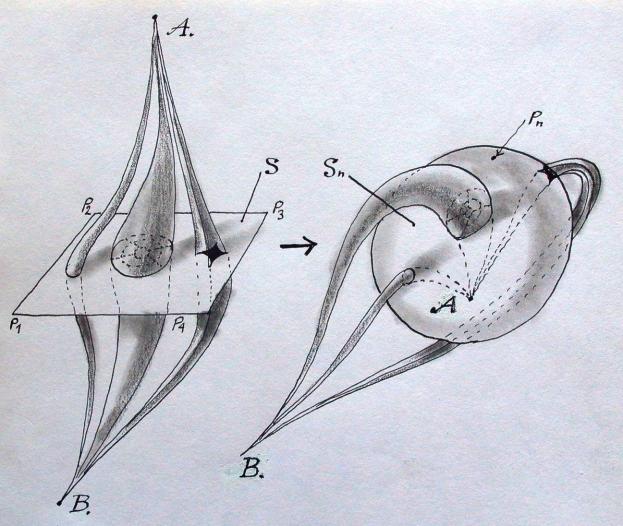
Fig. 11. The whole process of the life cycle of a universe from the beginning A to the end B.
The plane P1, P2, P3, P4 is a kind of Descartes’s analogy of vital spirit, a plane of
“now”, a map of sensory representations on surface of a brain, any theory at a
certain stage, a field of “transcendental objects”, certain stage of any
evolutional process. Surfaces S and Sn are “basic planes” or BP in texts of
V.Kandinsky where points, lines and forms with their “inner life” exist for
interpretations between artist and observer.
The perimeter P1, P2, P3, P4 of S could be topologically transformed
into point Pn on the sphere Sn, starting point A goes inside
the sphere, leaving ending point B outside. In this way
we have a model of endless but limited universe like the
one we are living in. What is the most important - the whole
system AB with universes S, Sn between is pulsating and
changing every moment showing composing and decomposing
processes of evolution. What we actually see on the surface
of the sphere or the flat canvas - are “frozen”, fixed sections
of very many conical evolutional processes AB like it is
on Fig. 8. We are part of the evolutionally process being
floating, constantly changing 2-dimentional objects in the universes S and Sn. The flat canvas or plane
instead of the sphere is used for convenience only-topologically
they are identical.
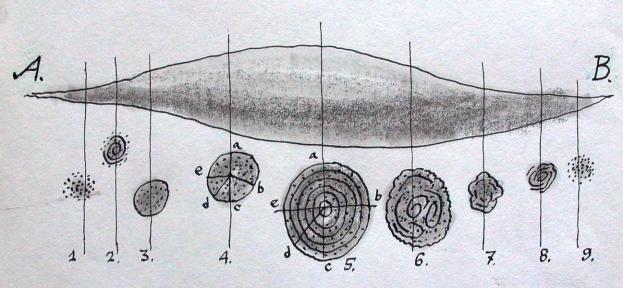
Fig. 12. Conical sections of an evolutional path AB from Fig. 11, showing basic principles of
composing and decomposing processes of the path.
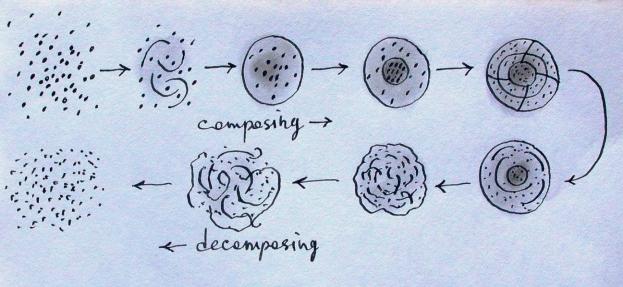
Fig. 13. Basic stages of composing and decomposing of any structures in an evolutional process.
“Some individuals have extra-sensory perception or true clairvoyance, to plan for the
future. The evolution of intelligence has evolved gradually increasing power of prediction.”
(From the book “Mechanics of the mind”)
Fig. 11, 12, 13 give us possible explanation
of the fact of prediction-knowing or feeling the laws of the basic patterns
might affect the possibility to predict.
Transformation of flat surface S(P1, P2, P3, P4) into sphere Sn is one of the oldest inventions of Life and is still used by primitive
living multicellular form of Nature- Volvox (around 500
millions years old) and in every embryological development
today.
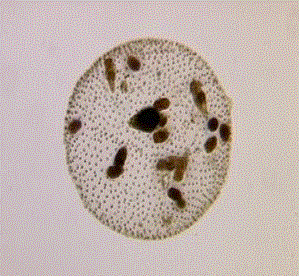 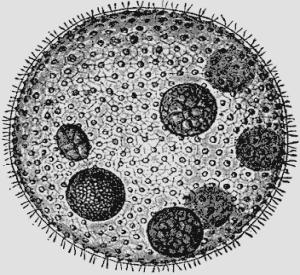
Fig. 14. Volvox-spherical colony of somatical
and reproductive cells with flagellas showing first stages of evolution.
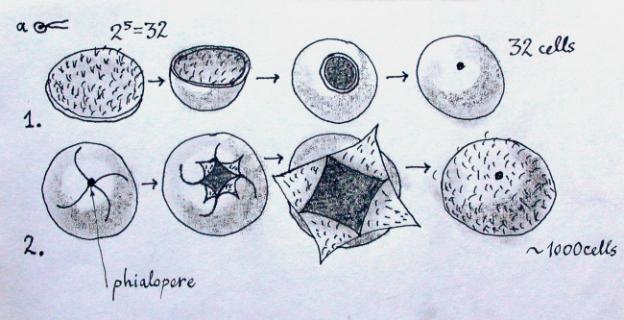
Fig. 15. Inversion of
Transformation line 1: First five divisions
of cell “a” give 32 cells in form of a discus, which immediately
turns in a sphere with flagella inside.
Transformation line 2: Sells continue divisions
and the colony grows. Than the hollow spheroidal Volvox embrio
turns inside-out through a small opening called the phialopore
(like point Pn in Fig. 11) by forming the cross-cut in form
of swastika to bring flagella from its inner to its outer
surface. The inversion is a dominant aspect of morphogenesis
in Volvox.
Embryological development of the human brain shows the same primary pattern which was first
developed by Nature in case of Volvox (transformation line 1 from Fig. 15):
After fertilization an egg by sperm:
“As the cells continue to divide and adhere
to each other through the 8, 16, 32 cell stages, etc., the
cluster begins to resemble a mulberry and, as a result, this
is often referred to as the 'morula' (mulberry) stage. During
the following sequence of divisions, the solid mass of daughter
cells develop an inner cavity, thereby entering the 'blastocyst'
(blast, developing; cyst, sac) stage. At one end of the now
hollow, ball-like structure, a cluster of cells grows more
rapidly than those around it, becoming the 'inner cell mass'.
This is the beginning of the embryo. The remainder of the
blastocyst will form the various parts of the embryo/fetus
support system, i. e. placenta, amniotic sac, etc.”
Arnold B. Scheibel.
 |
|
 |
| |
|
|
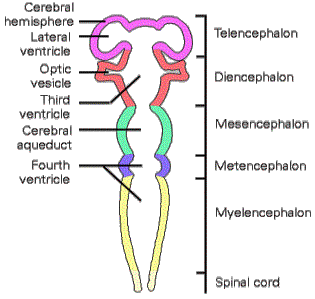
| Fig. 16. Embrio of a human brain |
|
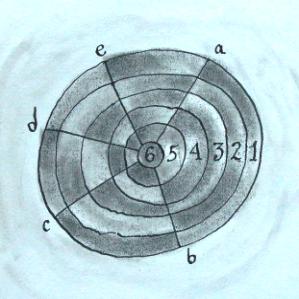
Fig. 17. Layers of a human brain |
Embrio of a human brain is topologically
a sphere from the first stage with later development of
2 structures.
Formation of layers:
The cerebral cortex of higher forms is made up of six cell layers. Each
layer has its distinct pattern of organization and connections.
During the developmental phase which we are following, the
cells initially move in to form the deepest or sixth layer.
Each successive migration ascends farther, progressively
forming more superficial (fifth, fourth, third second and
first) layers beyond the layer that was initially laid down.
Thus each group of migrating cells must pass through the
layers already laid down by the earlier arrivals, thereby
following an inside-out sequence of development.
Formation of radial structures:
“As this thickening occurs, the trip from inner
boundary of the neural tube to the outer portions becomes
longer and increasingly fraught with potential difficulty.
For this reason, some of these daughter cells unselfishly
develop into a specialized type of "rope ladder"
configuration, the radial glial guide cells, along which the
primitive nerve cells (neuroblasts) can migrate. A number
of these migrating cells may use the same glial guide cells,
literally gliding up the glial 'rope' one after the other.”
Arnold B. Scheibel.
So speaking we have here the description
of primary structure 6 from Fig.9-most complex from the
others ever existing on the planet. It is Fig. 17 where “ab”,
“bc”, “cd”, “de” and “ea” represent 5 senses.
During the first 6-10 years of life, the young individual undoubtedly achieves
the highest density of synapses per unit volume of neural
tissue (and the highest level of cortical glucose metabolism
as revealed by PET scans) that he/she will ever have. This
is also a period of enormous information input and acquisition,
social, environmental, linguistic, etc. The growing brain
may well be in its most sponge-like phase of learning as
the child becomes acquainted with the endless range of symbols,
rules, facts and behaviors that make it a member of its
culture.”
Arnold B.Scheibel
This is the most important period in a child’s life and
explains the fact why in Imperial Japan there was a rule
to give a name to a boy only after 7 years of age. First
years of life is the period of forming “the primary structures»
and is of the extreme importance for a child.
Let us summarize the picture of the Life, the Mind and the Universe.
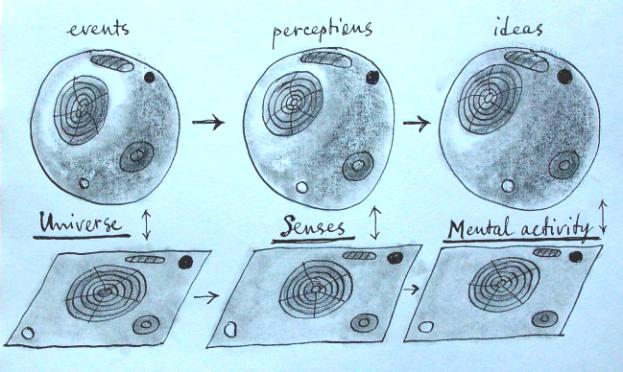
Fig. 18. Universe, Mind and Reason are not only made from the same substance,
they are the Substance and have the same structures of different
levels of formality or generalization.
COMPOSITION in PRIMARY ART
”Primary Art” has new definition of composition in general. Sizes, proportions
of forms are no longer important- number, order and position
replaced them. Any form and color which we actually see
is false pleasing us only by physiological reason in order
to survive as biological spices. There is no composition
as a concept, which can or can’t be fulfilled intentionally
as a concept itself or an art work. Composing returns back
to the stage of the remote past as a mandala, a process
which could be done starting from any point or few points
by an artist or group of artists having in mind basic laws
of primary structures and their interactions on an endless
but limited spherical universe which is a Plane of Now stretched
and flattened to a canvas of any form without holes. Singularities
are exceptions.
Elements of any composition are points, topological lines and surfaces.
Colors, numbers, orders and positions are the properties
of the elements.
New composition is not combination of new elements but
new combination of the same elements.
The first flying apparatus of Otto Lilienthal was made from the
components known to mankind 2000 years ago-wood, cloth, glue, ropes but it took
so long to develop a new composition in order to fly with help of mathematic. Geometry
by Lobachevsky is based on the same elements as geometry by Euclide but nearly
the same time was needed for new composition in order to fly in the outer space
of our Universe. Any evolutional step is a change of combinations.
PLAY
A “play” exists as variations and mutations everywhere in the Universe.
It is a pattern, an algorithm, a quantum jump and the main instrument of evolution.
In Life we see a play between animals and children where they explore “rules”
of future activity in their development path. Any play is learning a pattern,
variations in music, and an algorithm where they are implanted genetically in a
brain as primary structures. It is again Fig.7. where nucleus is rules and
field around is applications of them. Playing “outside” is cheating or being
false. The common expression “outsider” stays as unconscious proof of the
phenomenon in culture. Plays of children are learning models of behavior which
are all confined in a certain circle. The seven deadly sins could be replaced
by one expression- “Do not be selfish” (Bertrand Russell) but applied only for
members of the group, a tribe or a nation. You are a hero when you managed to
kill as many “enemies” as possible actually being outside of Fig.7. Children’s
drawings are first steps of generalization and a kind of play at the same time.
In this play they try to form first abstractions of any object and then “a
chair”, “a car”, “a dog”…among all possible chairs, cars, dogs…They start from
the highest level of formality passing stages of a fish, a mathematician, a
musician and a visual artist. That is why studying most early activity and drawings
of children before generalization of “object” is so important. They are
remarkable the same as prehistory drawings and tribal art. It is a possible
explanation why very remote cultures on the planet show strong resemblance
without a proof of their contacts. It is the only one possible development path
of the Universe, the Life and the Mind.
ELEMENTS OF ANY PRIMARY STRUCTURE. Points, lines,
surfaces-definitions and laws of their interactions (to be
continued)
A SYMMETRY (to be continued)
PHSYCHOLOGY OF A NEW BORN CHILD AND EARLIEST
CHILD’S DRAWINGS AS PRIMARY STRUCTURES (to be continued).
HISTORY OF WORLD ART AS TOPOLOGICAL STRUCTURES (to be continued).
Print
MANIFEST
© All www.konevin.com
texts and images are copyright Konevin Valery. They may be
downloaded and printed for educational purposes only. Any
other use without express written permission is copyright
infringement. |
